Oregon Chainsaw Guide Bar – Basic Maintenance Guide
Introduction
Proper maintenance of your Oregon chainsaw guide bar is essential for safe operation, smooth cutting performance and long service life. A well‑maintained guide bar reduces wear on your chain and drive sprocket, improves accuracy, and helps prevent overheating and uneven cutting.
This guide explains the basic maintenance steps recommended for Oregon guide bars, helping you keep your chainsaw running at its best.
 | |
|---|---|
| Basic Guide Bar Maintenance Tasks | |
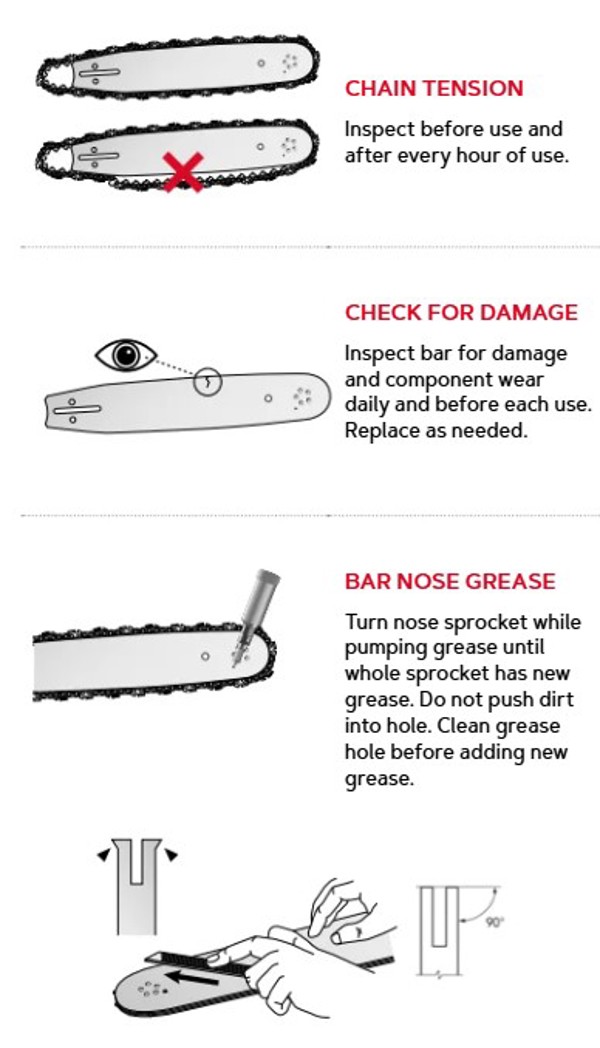 Click on this link to go to the Chainsaw Maintenance parts ordering pages... | 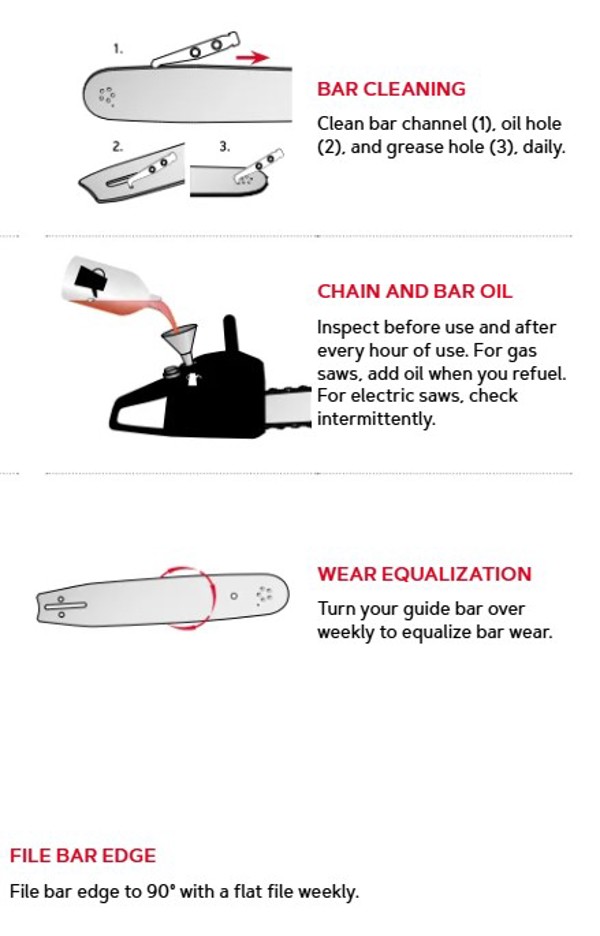 |
Why Guide Bar Maintenance Matters
Your guide bar is constantly exposed to friction, pressure and debris while cutting. Regular maintenance helps:
- Improve cutting efficiency
- Reduce premature wear
- Prevent bar rail damage
- Extend the lifespan of the bar and chain
- Reduce kickback risk
- Ensure smoother, straighter cuts
A poorly maintained bar can lead to chain binding, uneven cutting, and overheating — all of which may cause long‑term damage to your chainsaw.
1. Inspecting Your Oregon Guide Bar
Before and after cutting, check the bar for:
✓ Bar rail wear
Look for sharp edges, burrs or uneven rail height.
✓ Groove damage or clogging
Packed sawdust or debris can prevent proper chain lubrication.
✓ Nose sprocket condition
Ensure the sprocket rolls freely without grinding or stiffness.
✓ Excessive blueing (heat marks)
This indicates overheating and insufficient lubrication.
If any severe wear is found, the guide bar may need repairing or replacing.
2. Cleaning the Guide Bar
Regular cleaning helps maintain smooth chain operation.
How to clean your bar:
- Remove the chain and bar from the saw
- Use a bar groove tool or scraper to clean the guide groove
- Brush away sawdust, resin and oil build‑up
- Clean all oil holes to ensure proper lubrication
- Wipe everything down with a clean cloth
Removing debris prevents heat build‑up and ensures the chain moves freely along the bar.
3. Dressing (Filing) the Bar Rails
Oregon recommends occasional bar “dressing” to restore square, even bar rails.
You should dress the rails when:
- The chain leans to one side when cutting
- The bar shows sharp edges or burrs
- Cuts are pulling left or right
Use a flat file or bar dressing tool to remove burrs and level the rails. This helps maintain accurate chain tracking.
4. Inspect and Lubricate the Nose Sprocket
Most Oregon guide bars have a roller nose sprocket that requires attention.
Maintenance steps:
- Rotate the sprocket by hand to ensure free movement
- Clean out debris
- Apply a small amount of bar nose grease (if your bar type requires it)
A stuck or damaged sprocket can cause chain breakage or severe bar wear.
5. Check Oil Flow and Lubrication
Lubrication is vital for both the chain and bar.
To ensure proper oiling:
- Clean the oil port on the bar
- Check that the chainsaw’s oil pump is functioning
- Use quality chain oil designed for high‑speed cutting
Proper lubrication reduces friction, heat and wear.
6. Rotate the Guide Bar Regularly
To promote even wear, flip the bar every time you sharpen the chain or after each major cutting session.
This prevents one side from wearing down faster than the other.
7. When to Replace Your Guide Bar
Replace an Oregon guide bar if you notice:
- Cracked rails
- Rails worn too thin
- Deep groove wear
- Bent or twisted bar
- Seized nose sprocket
Continuing to use a damaged bar can be dangerous and may cause further damage to the chainsaw.
Safety Tips
- Always wear gloves when handling the bar and chain
- Disconnect the spark plug or battery before performing maintenance
- Ensure the bar is completely cool before cleaning or filing
Need Replacement Oregon Guide Bars or Chains?
If your bar is worn or damaged, or if you’re looking for the correct matching chain, we stock a wide range of genuine Oregon chainsaw bars, chains and maintenance tools.
Provide your saw model or bar/chain numbers and our team will help you find the correct replacement.
Click on this link to go to the Chainsaw Maintenance parts ordering pages...
FAQ's: Oregon Chainsaw Guide Bar Basic Maintenance
1. How often should I maintain my Oregon chainsaw guide bar?
For regular users, inspect and clean the guide bar after every cutting session. Professional or heavy users should check it several times throughout the day. Flipping the bar and dressing the rails should be done whenever sharpening the chain.
2. How do I know if my guide bar needs maintenance?
Signs your bar needs attention include:
- Uneven or crooked cuts
- Burrs or sharp edges on the rails
- Excessive blueing from heat
- Chain leaning to one side
- Debris packed in the groove
If you notice any of these, clean and inspect the bar immediately.
3. What causes Oregon guide bar rails to wear out?
Rails typically wear due to:
- A dull chain
- Incorrect chain tension
- Poor lubrication
- Excessive side pressure while cutting
- Using a worn drive sprocket
Regular maintenance greatly reduces rail wear.
4. Do I need to grease the nose sprocket on my Oregon bar?
Some Oregon bars have greaseable nose sprockets, while others are sealed.
Check your specific bar model:
- If there is a grease hole, apply a small amount of bar nose grease.
- If not, the sprocket is sealed and requires no greasing.
5. Why is my guide bar turning blue or black?
Blueing or dark marks indicate overheating, usually caused by:
- Insufficient chain oil
- Clogged oil holes
- Debris in the bar groove
- A seized nose sprocket
Correct the cause immediately to prevent bar damage.
6. How do I clean the groove of my chainsaw bar?
Use a bar groove tool, scraper, or thin putty knife to remove sawdust, resin, and oil build‑up. Clearing the groove helps the chain move freely and allows oil to reach the bar rails.
7. How do I check if my guide bar is worn out?
Replace the bar if you notice:
- Rails worn thin or cracked
- Bent or twisted bar body
- Deep groove damage
- A seized or damaged nose sprocket
- Chain wobbling excessively or derailing
A worn bar can be dangerous and must not be used.
8. Should I flip my chainsaw bar?
Yes. Flipping the bar every time you sharpen the chain ensures the rails wear evenly, significantly extending the bar’s lifespan.
9. What type of oil should I use with an Oregon guide bar?
Use quality chainsaw bar and chain oil designed for high‑speed cutting. Avoid using engine oil or thin lubricants — they do not offer proper protection and can cause excess wear.
10. Can I use any chain on my Oregon guide bar?
No. Your bar is designed for a specific pitch and gauge. Using the wrong chain size can cause:
- Poor cutting
- Excessive wear
- Chain derailment
Check your bar markings or contact us for help selecting the correct Oregon chain.
11. Why is my chainsaw cutting crooked?
A crooked cut usually means:
- The bar rails are uneven
- One side of the bar is worn more than the other
- The chain cutters are sharpened unevenly
Dress the bar rails, sharpen correctly, and flip the bar to restore straight cutting.
12. When should I replace my drive sprocket?
Every two chains, or sooner if you see visible wear. A worn sprocket accelerates guide bar wear and stresses the chain.
Click on this link to go to the Chainsaw Maintenance parts ordering pages...