There are many that will advise very strongly on either side of this argument:
‘Ooh, you shouldn’t mulch, it builds up thatch in the lawn…’
or,
‘Mulching is great, it improves the grass and you don’t have to dispose of the grass clippings on the compost heap…’
So what are the benefits of mulching grass, rather than collecting it and, what even is mulching?! 🤷♂️
What is mulching?
Mulching is a method of grass cutting, where the blades of cut grass are kept inside the cutting deck for as long as possible, rather than being ejected as quickly as possible when collecting or rear/side discharging the grass.
The benefits of mulching?
- The obvious benefit of mulching grass means you do not have to dispose of the grass after cutting it. Some grass breaks down well on a compost heap, but too much, and it goes into a soggy, smelly mess! Having to dispose of the grass becomes more and more of an issue therefore, the larger the area you need to cut.
- Grass contains water and nutrients including nitrogen, which are important for a healthy lawn.
- Not having to trundle backwards and forwards to the grass heap to empty the grass box, makes the overall cutting time quicker.
So what is the issue and why do some people advise against mulching?
Well, mulching is not an exact science and results vary, depending on the type of cutting deck, the grass conditions and the speed of travel. Mulching incorrectly, can leave cut grass on top of the lawn, which can build up in the grass, encouraging weeds and thatch to grow, which reduces the health of the grass. It can also be unsightly, along with the kids or dog, dragging it back through the house…!
The operative word here, is ‘incorrectly,’ i.e. mulching incorrectly, can… etc.
As with everything, there are two ways of doing something. You can follow best practice and get the desired results, or not follow it and end up with not so desired results. 🤔
This means that problems that have arisen from mulching have pretty much, been down to user error 🙊
Ok then, so what is best practice for mulching?
When mulching is carried out correctly, you should be able to look behind you as you are cutting and not see any grass on the surface of the lawn. You should also be able to walk across the grass and pick up very little on your feet. If you are achieving this, you are adding water and nutrients to the lawn and will cultivate a healthy green lawn.
Cutting Deck
There are many types of cutting deck and whether on a garden tractor or a pedestrian mower, they follow the same principles. Pretty much the best mulching deck, was the John Deere Freedom 42 Mulch Deck. It had two dedicated mulching chambers, which were pretty much perfect circles and had very rounded top edges along with very little for grass to get stuck on inside these chambers.
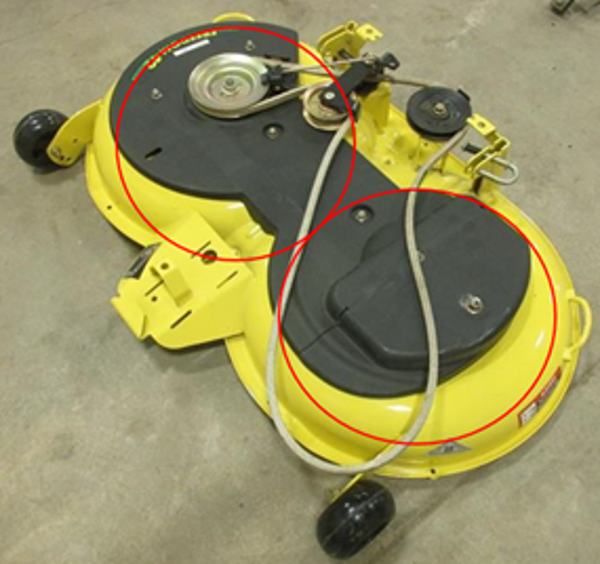
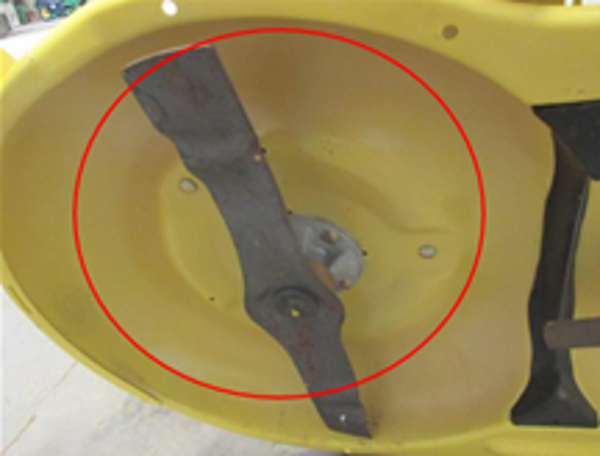
With the low-profile mulching blades, the grass could be thrown around the inside of each chamber for longer, meaning it was cut into more pieces, before falling back down into the grass.
You can get the idea of this, by taking a blade of grass and tearing it into two or three pieces. Now take another blade of grass and tear it into 5-10 pieces. It soon becomes quite clear, the more times it is cut, the finer each piece becomes and the easier it is for the cut grass to fall through the top layers of grass and land on the soil, where it quickly decomposes, helping, rather than hindering the grass 🤯
With this in mind, the roundest, smoothest cutting deck, is going to give the best mulching performance. Cleaning it after every use, helps to prevent grass build up, which can prevent the grass from being cut as finely as required, causing it to fall out early in larger pieces.
Time waits for no man…
Hmmm, as frustrating as it may be, good mulching results are not achieved when there are time constraints involved. Remember you are trying to keep the cut grass inside the deck for as long as possible. To achieve this, there are factors that should be taken into account which ‘should’ affect the speed at which you cut.
- Length of grass – the basic rule of mulching is the 1/3 rule. No more than a third of the length of grass should be cut to be able to achieve best results.
- Conditions – wet grass is stickier than dry, so more likely to stick in the deck and prevent a smooth flow of grass around the deck.
- Cleanliness of the cutting deck – as before, the cleaner the deck, the better flow of grass and the finer it will be cut, leading to better results.
To sum up then…
Mulching is good for your lawn and will help to improve it. It will cut down the time you take to cut the lawn and reduce the need to dispose of cut grass.
If done correctly!! 🤪
When mulching grass, you should be able to look behind you and there be no visible grass on the surface of the lawn.
If you can see grass behind you:
Simply slow down.
If that does not work, raise the deck a little and see if that helps.
If that does not work, clean the deck and check the blades are not damaged.
It’s all about physics in the end…
Cutting too much grass, or going too fast, has the same effect – a greater quantity of grass inside the cutting deck than it is designed to handle, resulting in grass falling out of the deck sooner than desired and therefore in larger, visible pieces.
The smaller the quantity of grass and the longer the time the grass can be kept in the cutting deck, the finer the grass particles are going to be and the better the results are going to be.
The more often you cut, the easier it is to achieve this.
Best results when mulching, are achieved when the grass is cut at least once a week. This has the added benefit of encouraging stronger and healthier grass with less weeds and a greener lawn 👍
Click on this link to go to the Mulch Plugs and Kits page...
If you can't find what you are looking for, please use the Contact Us button at the bottom of every page and will be happy to assist you.